QueueLess
Multi-tenant virtual queue management platform
Overview
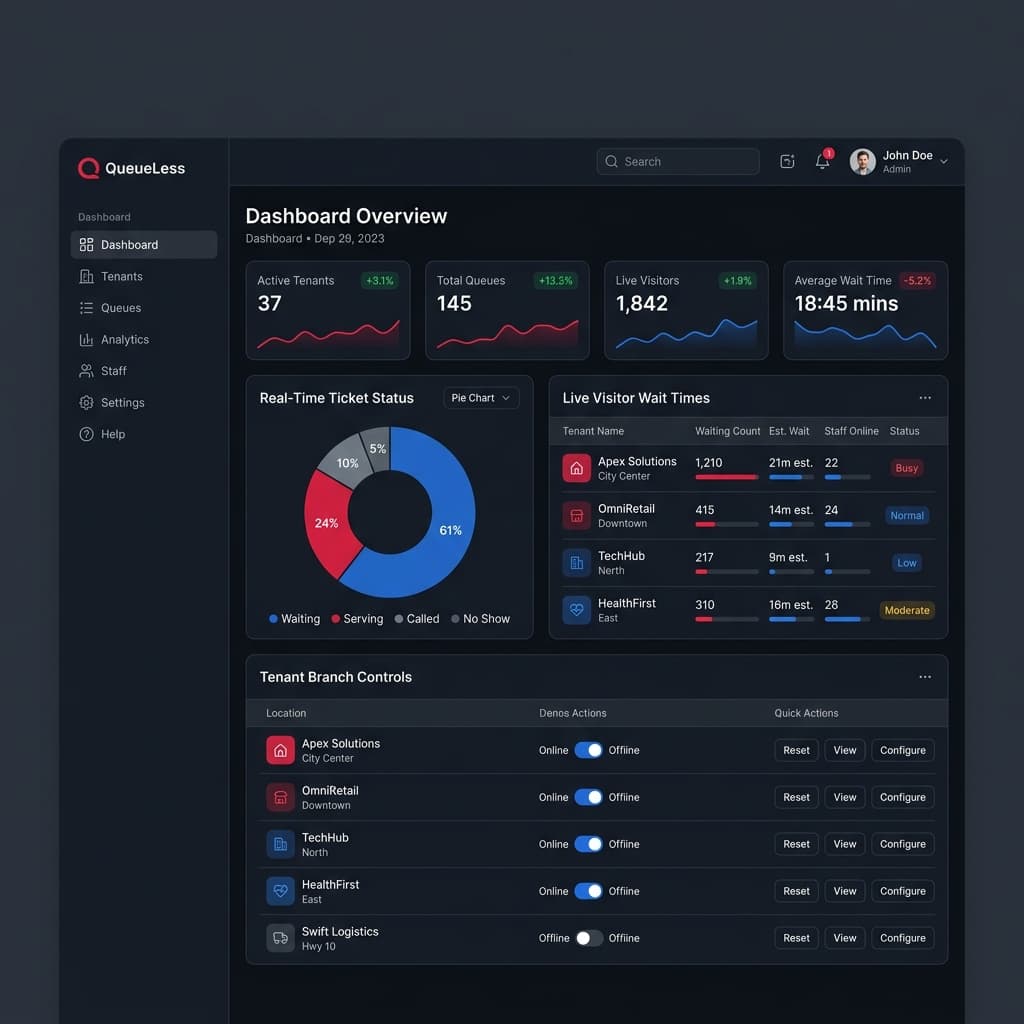
QueueLess is a multi-tenant virtual queue management platform built for local businesses that need a better alternative to physical waiting lines. Customers join a queue by scanning a QR code and can track their position in real time from their own device, while each business operates in a fully isolated tenant space — so one business's queue data, staff, and customers never mix with another's, even though they share the same underlying system.
Technical Architecture & Specifications
Key Features & Implementation Highlights
- QR code-based check-in — no app install required for customers to join a queue
- Live queue position tracking, updated in real time as the queue moves
- Atomic, transaction-based state machine operations that prevent race conditions when multiple queue updates happen concurrently
- Row-Level Security (RLS) policies enforcing strict tenant isolation, so each business's data stays fully separated at the database layer
Challenges & Tradeoffs
The core architectural decision was enforcing tenant isolation at the database layer using Supabase Row-Level Security (RLS) policies rather than filtering tenants in application code. Application-layer filtering is simpler to implement, but a single missed filter clause in any query would silently leak one business's queue data to another — a critical failure in a multi-tenant system. RLS pushes the isolation guarantee into PostgreSQL itself, so even a buggy or incomplete query physically cannot return rows belonging to a different tenant. The tradeoff is that RLS policies add complexity to the schema and make some queries harder to debug, but for a system where data leakage between tenants is the worst possible failure mode, the safety guarantee is worth the added schema complexity.